
The government's decision to accept a series of recommendations aimed at tackling antisemitism and racism within the NHS has prompted widespread discussion among healthcare professionals, including those working in Newcastle's dental sector.
The move follows a review led by Lord Mann, the government's independent adviser on antisemitism, which examined concerns about discrimination, workplace culture and the display of political symbols within NHS settings. Ministers have now accepted the recommendations in full, paving the way for potential changes to uniform policies across NHS organisations in England.
For dental professionals in Newcastle and across the North East, the debate touches on a wider issue that extends beyond workplace attire. Questions surrounding professional conduct, patient confidence and the rise of discrimination within healthcare settings have become increasingly prominent over the past two years.
Concerns Over Rising Antisemitism In Dentistry.
Professor Andrew Eder, chair of trustees at the UK Jewish Dental Society, has warned that antisemitic incidents within dentistry have increased significantly since the Hamas attacks on Israel on 7 October 2023.
Speaking publicly about the issue, Professor Eder said he had witnessed a level of hostility unlike anything experienced during his four decades working within the profession. He suggested that antisemitism had affected individuals at every level of dentistry, including students, practising clinicians and patients.
According to Professor Eder, social media has played a major role in amplifying tensions, allowing disagreements surrounding international events to spill into professional environments. His comments reflect concerns raised by healthcare workers across the country who believe political divisions have increasingly entered workplaces that traditionally remained neutral spaces focused on patient care.
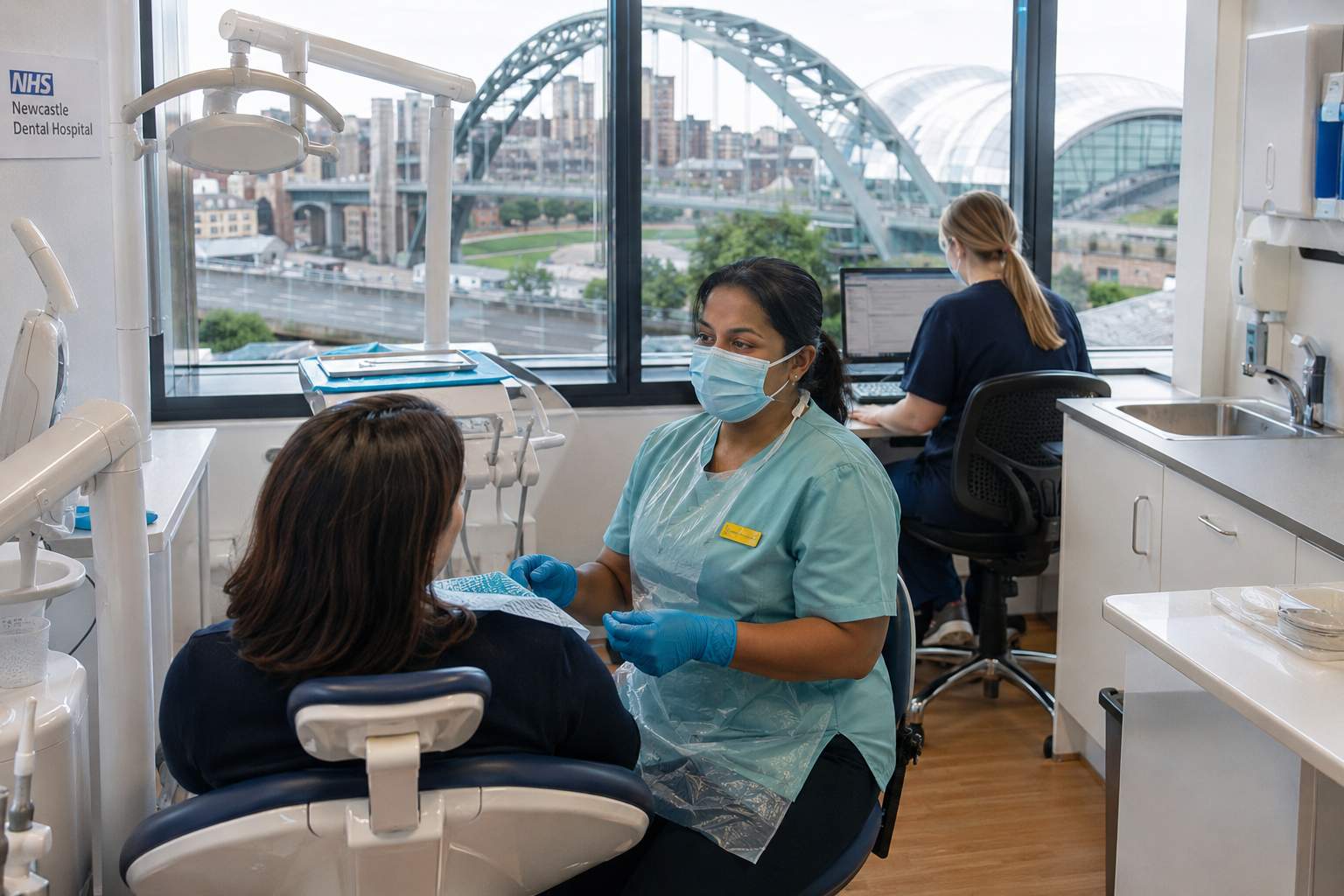
Dental professionals in Newcastle have also been paying close attention to the conversation, particularly as NHS organisations review their policies and consider how future guidance may affect staff conduct.
What The New NHS Recommendations Mean.
Under the recommendations accepted by the government, NHS organisations will receive clearer national guidance regarding uniforms, identification badges and equipment provided by employers.
The proposed guidance is expected to address the display of political symbols, including badges and insignia linked to both pro-Israel and pro-Palestinian causes. The intention is to create a more consistent approach across NHS workplaces while ensuring patients feel comfortable and confident during treatment.
Health Secretary James Murray confirmed that the government intends to proceed with the recommendations, although consultation will take place before any final guidance is introduced.
Supporters argue that healthcare settings should remain politically neutral environments where patients from all backgrounds feel respected and safe. Critics, however, have raised concerns about how any restrictions might affect freedom of expression for NHS employees.
For healthcare providers in Newcastle, where hospitals, dental practices and community health centres serve diverse populations, the consultation process is likely to attract significant interest.
Discrimination Remains A Wider NHS Challenge.
The discussion surrounding antisemitism forms part of a broader conversation about discrimination within the NHS workforce.
Data referenced in Lord Mann's review highlighted ongoing concerns affecting multiple communities. The report found that 16% of Muslim NHS staff reported experiencing discrimination over the previous year. Among Black and minority ethnic employees, the figure rose to 20%.
These findings underline the scale of the challenge facing healthcare organisations throughout England.
The NHS is one of the largest employers in the world, with more than 1.4 million staff members working across hospitals, community services and primary care settings. Maintaining inclusive workplaces remains a major priority as healthcare providers seek to recruit and retain skilled professionals.
In Newcastle, where the NHS is one of the region's largest employers, initiatives promoting diversity and inclusion have become increasingly important in recent years. Healthcare leaders continue to emphasise the need for workplaces where staff and patients feel equally respected regardless of their background, ethnicity or religion.
The Importance Of Trust In Dental Care.
Trust has always been one of the foundations of successful dental treatment.
Patients often share sensitive personal information and place themselves in vulnerable situations during appointments. As a result, professional standards require dentists and dental teams to maintain behaviour that inspires confidence.
The General Dental Council (GDC), which regulates dental professionals throughout the UK, has repeatedly stressed the importance of maintaining public trust.
In guidance published during late 2025, the regulator reminded dental professionals that discriminatory behaviour based on characteristics such as religion, ethnicity or race breaches professional expectations.
At the same time, the GDC acknowledged that dental professionals retain the right to hold and express political opinions. However, it stated that such views should be communicated in a way that does not undermine confidence in the profession.
For Newcastle patients seeking NHS or private dental treatment, these principles remain central to ensuring positive experiences and high standards of care.
Social Media Continues To Shape Professional Conduct.
One of the most significant challenges highlighted by healthcare leaders is the growing influence of social media.
Platforms that allow instant communication have transformed how professionals engage with political issues and public debates. While social media offers opportunities for education and discussion, it has also increased the risk of conflict, harassment and reputational damage.
Recent statistics from Ofcom show that approximately 94% of UK adults who use the internet access social media or messaging platforms each month. This widespread usage means online discussions increasingly influence workplace relationships and public perceptions.
Within healthcare professions, comments made online can quickly become public and potentially impact patient confidence.
As a result, professional regulators across medicine, dentistry and nursing continue to remind staff that standards of conduct apply both inside and outside the workplace.
How Newcastle's Dental Community Could Be Affected.
Although the proposed NHS guidance has not yet been finalised, dental practices and NHS organisations across Newcastle will be monitoring developments closely.
Many healthcare providers already have policies governing workplace behaviour, uniforms and patient interactions. New national guidance could create greater consistency while offering clearer expectations for employees.
Industry observers believe the consultation process will be important in determining how any future rules are implemented and whether exemptions or specific circumstances are considered.
For Newcastle's dental community, the challenge will be balancing freedom of expression with professional responsibilities and patient expectations.
As discussions continue, most stakeholders appear united on one key principle: healthcare settings should remain places where every patient receives care free from discrimination, prejudice or political tension.
Looking Ahead.
The government's acceptance of Lord Mann's recommendations marks a significant step in addressing concerns about antisemitism and broader forms of discrimination within the NHS.
While consultation remains ongoing, the debate has already highlighted the importance of professionalism, inclusivity and patient trust across healthcare services.
For dental professionals in Newcastle and throughout the UK, the coming months could bring important changes to workplace guidance. Whatever the final outcome, the focus is likely to remain on creating environments where both staff and patients feel respected, valued and safe.
Do you think new NHS guidance on political symbols will improve patient trust in Newcastle healthcare settings?
Health News
Antisemitism Concerns Prompt Major NHS Policy Changes Across England
Advertisement





Comments (0)
You must be logged in to post comments.
Don't have an account? Register here
No comments yet. Be the first to share your thoughts!