
Motorists across Newcastle are being reminded of an often-overlooked driving rule that could result in hefty financial penalties, licence points and even a driving ban if ignored.
As thousands of pet owners regularly travel with their dogs across Tyneside and the wider North East, road safety experts are urging drivers to ensure their animals are properly secured before setting off. Failing to do so could not only put lives at risk but also leave motorists facing fines of up to £5,000 under existing road traffic laws.
The warning comes amid growing concerns that many drivers remain unaware of the legal responsibilities associated with transporting pets in vehicles.
What The Highway Code Says About Travelling With Dogs.
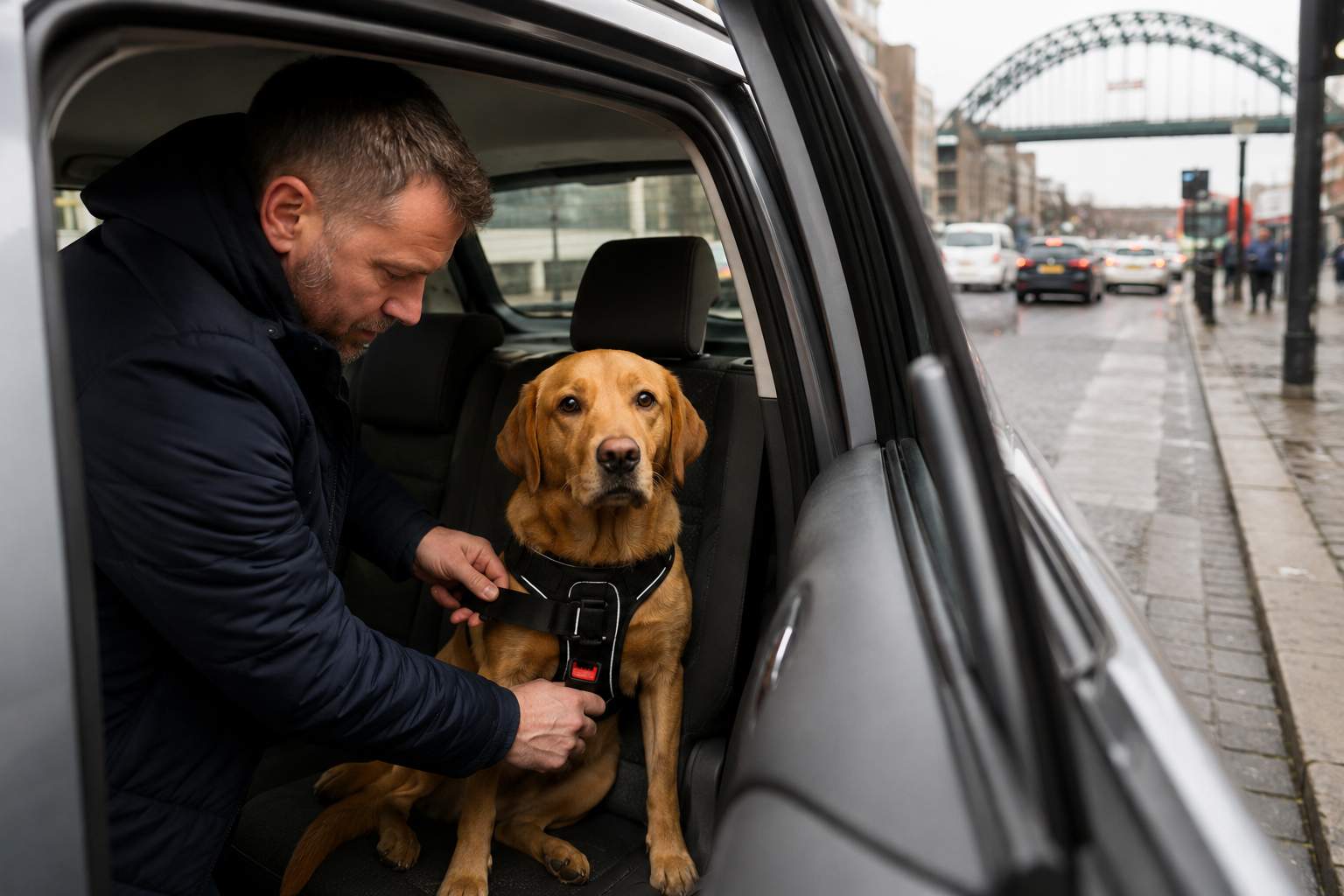
Rule 57 of the Highway Code clearly states that dogs and other animals must be suitably restrained while travelling in a vehicle. The purpose of the rule is to prevent pets from distracting drivers and to reduce the risk of injury during sudden braking or collisions.
Recommended methods of restraint include dog seat belt harnesses, pet carriers, cages and vehicle dog guards. These safety measures are designed to keep both animals and vehicle occupants protected while on the road.
While many motorists assume that allowing a dog to sit freely in the car is harmless, experts say the consequences can be far more serious than people realise.
Newcastle Pet Owners Urged To Take Safety Seriously.
With Newcastle home to thousands of dog-owning households, the issue is particularly relevant for local drivers travelling along busy routes such as the A1, Coast Road and Tyne Tunnel approaches.
A loose dog can easily distract a driver by moving around the vehicle, climbing into the front seats or obstructing visibility. Even a brief distraction can increase the likelihood of a collision, especially during periods of heavy traffic.
Road safety specialists warn that in the event of a crash, an unrestrained dog effectively becomes a projectile. This can cause devastating injuries not only to the animal but also to passengers inside the vehicle.
Nick Zapolski, founder of used car buying service Choose My Car, said drivers often underestimate the risks involved.
He explained that travelling with an unsecured dog can lead to serious consequences for both pets and motorists. He stressed that simple and affordable restraint systems can dramatically improve safety while helping drivers avoid legal trouble.
Fines, Licence Points And Driving Bans Possible.
Many motorists are surprised to learn that there is no specific offence labelled "driving with an unrestrained dog". However, drivers can still face penalties under broader road traffic laws if their pet causes a distraction or contributes to dangerous driving.
In less severe cases, police may issue fixed penalties of up to £1,000. In more serious incidents where careless or dangerous driving is involved, fines can rise to £5,000.
Drivers may also receive penalty points on their licence. In some circumstances, up to nine points can be imposed, while repeat offences or particularly serious cases could lead to disqualification from driving.
Some motorists could even be required to retake their driving test before being allowed back on the road.
Research Reveals Many Drivers Ignore The Risks.
One of the biggest concerns among safety campaigners is the apparent lack of awareness surrounding the dangers of unrestrained pets.
Research conducted by Dogs Trust found that more than 60 per cent of drivers do not believe travelling with an unrestrained pet is dangerous. That statistic has raised concerns among road safety advocates, who argue that misconceptions continue to put both animals and people at unnecessary risk.
According to government road safety figures, driver distraction remains a significant factor in collisions across the UK each year. While mobile phones often receive the most attention, pets can create similar distractions if allowed to move freely around a vehicle.
Safety experts say that even at relatively low speeds, the force generated during a collision can significantly increase the risk of injury to an unsecured animal.
Simple Steps Drivers Can Take Today.
Fortunately, ensuring compliance with the Highway Code is straightforward and inexpensive.
Pet seat belt harnesses are widely available and can be fitted in minutes. For larger dogs, vehicle guards or secure travel crates may provide additional protection.
Experts recommend positioning dogs in the rear of the vehicle whenever possible. Allowing a dog to travel in the front passenger seat can expose the animal to additional dangers from airbag deployment during an accident.
Drivers are also encouraged to ensure pets are comfortable before longer journeys by providing water, planning rest stops and allowing sufficient ventilation.
These simple precautions can make journeys safer for everyone involved while helping motorists avoid potentially costly penalties.
Why Newcastle Motorists Should Pay Attention.
As summer approaches and more families plan days out to the Northumberland coast, the Newcastle Quayside and countryside destinations across the North East, the number of pets travelling in vehicles is expected to increase.
Road safety experts say now is the ideal time for motorists to review their pet travel arrangements and ensure they comply with Highway Code requirements.
What may seem like a harmless habit could ultimately result in significant fines, penalty points and serious safety risks. For Newcastle drivers, taking a few extra moments to secure a pet before starting a journey could prevent both financial and personal consequences.
Have your say below.
What do you think about these rules for dog owners in Newcastle?
Lifestyle News
Newcastle Drivers Risk £5,000 Fine Over Having Their Dog in Car
Advertisement




Comments (0)
You must be logged in to post comments.
Don't have an account? Register here
No comments yet. Be the first to share your thoughts!