
For many households across Britain, a traditional Sunday roast remains one of the nation’s most loved meals. From crispy roast potatoes to buttery carrots and rich gravy, the classic dish is seen as a comforting staple of British culture.
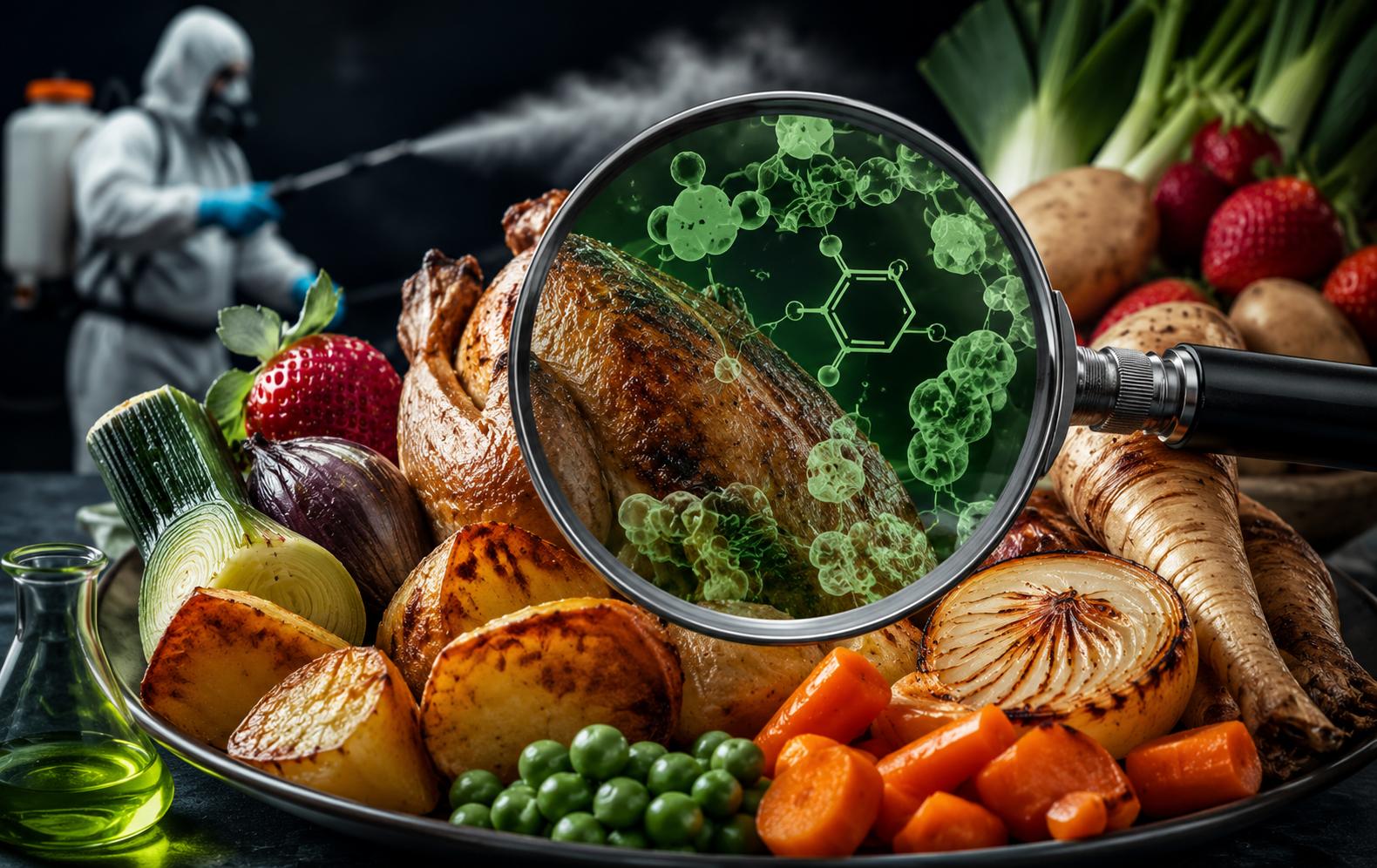
However, a new report from Greenpeace UK has sparked concern after researchers revealed that many of the ingredients commonly found on a roast dinner plate are being treated with dozens of different pesticides during production.
According to the environmental group, more than 100 separate chemicals were recorded across a range of fruit and vegetables regularly consumed in the UK, including onions, leeks, potatoes, carrots, peas, parsnips and strawberries.
The findings have reignited debate around pesticide use in British farming, food safety standards and the long-term impact chemical-intensive agriculture may be having on both public health and the environment.
Onions and leeks among the worst affected crops.
The Greenpeace analysis examined agricultural data from 2023 and 2024, focusing on pesticides used during the growing process of several popular food crops.
Researchers found onions and leeks were exposed to the highest number of pesticides, with 43 different chemicals reportedly used across the testing period. Strawberries followed closely behind with 42 pesticides linked to their production.
Carrots and parsnips were found to have been treated with 40 separate chemicals, while field potatoes were associated with 31. Peas, swede and turnips also featured heavily in the report.
Environmental campaigners say the findings highlight the scale of chemical use involved in modern farming methods, particularly within large-scale food production systems.
Nina Schrank, a senior campaigner at Greenpeace UK, said many consumers would likely be surprised by the extent of pesticide use linked to foods often viewed as healthy and natural.
She warned that what appears to be a traditional British meal on the surface may involve a significant amount of chemical intervention before it reaches supermarket shelves.
Concerns raised over banned and hazardous chemicals.
Among the 102 pesticides identified in the report, Greenpeace claimed seven have already been banned within the European Union due to concerns surrounding health risks and environmental damage.
Some of these chemicals have reportedly been linked to serious issues including cancer risks, damage to aquatic ecosystems and harm to bees, birds and mammals.
Campaigners are also raising concerns about substances classified as highly hazardous pesticides, often referred to as HHPs. These chemicals can pose dangers to wildlife and may remain in soil and water systems for extended periods.
Several pesticides identified in the study were also described as PFAS chemicals, sometimes referred to as "forever chemicals" because they can take decades or even centuries to break down naturally.
Environmental experts say these substances are becoming an increasing concern globally because they can accumulate in ecosystems and potentially enter food and water supplies over time.
Food safety limits remain within legal guidelines.
Despite the alarming findings, officials stress that pesticide residue levels found on food sold in the UK are regulated under strict legal safety standards.
Current maximum residue levels, known as MRLs, are designed to ensure that any pesticide traces remaining on food products stay below levels considered harmful to human health.
According to government guidance, these limits apply to both imported produce and food grown within Britain.
However, critics argue the current system does not always account for the cumulative impact of exposure to multiple chemicals over time. Some campaigners believe people may also be exposed to pesticides through drinking water, household products and environmental contamination.
Greenpeace says the combined effect of consuming small amounts of different chemicals remains an area that requires further research.
Environmental groups call for major farming reforms.
The report has intensified calls for changes to farming practices across the UK, with campaigners urging ministers to introduce tougher restrictions on pesticide use.
Greenpeace claims excessive chemical use is contributing to declining wildlife populations, particularly among pollinators such as bees and butterflies.
Ms Schrank said many areas of the British countryside are becoming quieter as species struggle to survive in heavily treated agricultural environments.
She also argued that some farmers have become trapped in a cycle of dependency on expensive chemical products due to pressure from food supply chains and changing market demands.
Environmental organisations are now calling on the Government to increase investment in nature-friendly farming methods that reduce reliance on pesticides while maintaining food production levels.
Farmers facing growing economic pressures.
The debate comes at a difficult time for many British farmers, who continue to face rising production costs, unstable weather conditions and financial uncertainty.
Supporters of conventional farming methods argue pesticides remain necessary to protect crops from disease, weeds and pests that could damage harvests and affect food supply.
However, sustainable farming groups say alternative approaches are already proving successful in parts of the UK.
Martin Lines, chief executive of the Nature Friendly Farming Network, said many farmers want to reduce chemical use but require greater support and long-term investment to transition away from intensive systems.
He warned that current economic pressures often leave farmers with limited options, especially when retailers demand large quantities of low-cost produce.
Government defends current regulations.
The Department for Environment, Food and Rural Affairs defended the UK's food safety rules following the publication of the report.
A Defra spokesperson said pesticide residue limits are based on rigorous scientific assessments designed to protect consumers.
Officials also pointed to the Government’s National Action Plan, which aims to encourage more sustainable farming practices while helping farmers manage pests effectively and maintain food security.
Recent figures show the overall weight of pesticides used on UK arable crops has fallen over recent years. However, environmental groups argue stronger action is still needed if Britain wants to restore biodiversity and improve long-term environmental health.
The growing public interest surrounding food quality, sustainable farming and chemical use suggests the issue is unlikely to disappear anytime soon.
As more consumers become aware of how food is produced, pressure may continue mounting on both supermarkets and policymakers to provide greater transparency around pesticide use in British agriculture.
What are your thoughts on pesticide use in British farming? Share your opinions in the comments and join the debate on food safety and sustainable agriculture in the UK.
Would stricter pesticide rules change the way you shop for fruit and vegetables? Let us know your views and experiences below.
Food & Drink News
The Toxic Truth Behind Your Sunday Roast - Hidden Chemicals Found in Common Ingredients
Advertisement




Comments (0)
You must be logged in to post comments.
Don't have an account? Register here
No comments yet. Be the first to share your thoughts!