
Tomorrow morning, polling stations will open across Scotland, Wales and much of England, as millions of people head out to decide who they want representing them - not just in Westminster-style politics, but in their own communities.
More than 5,000 council seats are being contested across 136 councils, alongside six mayoral elections and major devolved contests in Scotland and Wales.
And while the national parties will dominate the television coverage, something else is happening quietly across Britain: more and more voters are turning towards independent candidates.
For weeks already, people have been voting by post. Now, parties and candidates are making their final pitch. But for many voters, this election is becoming less about party loyalty and more about trust, accountability and local representation.
That is why independent candidates are gaining real momentum.
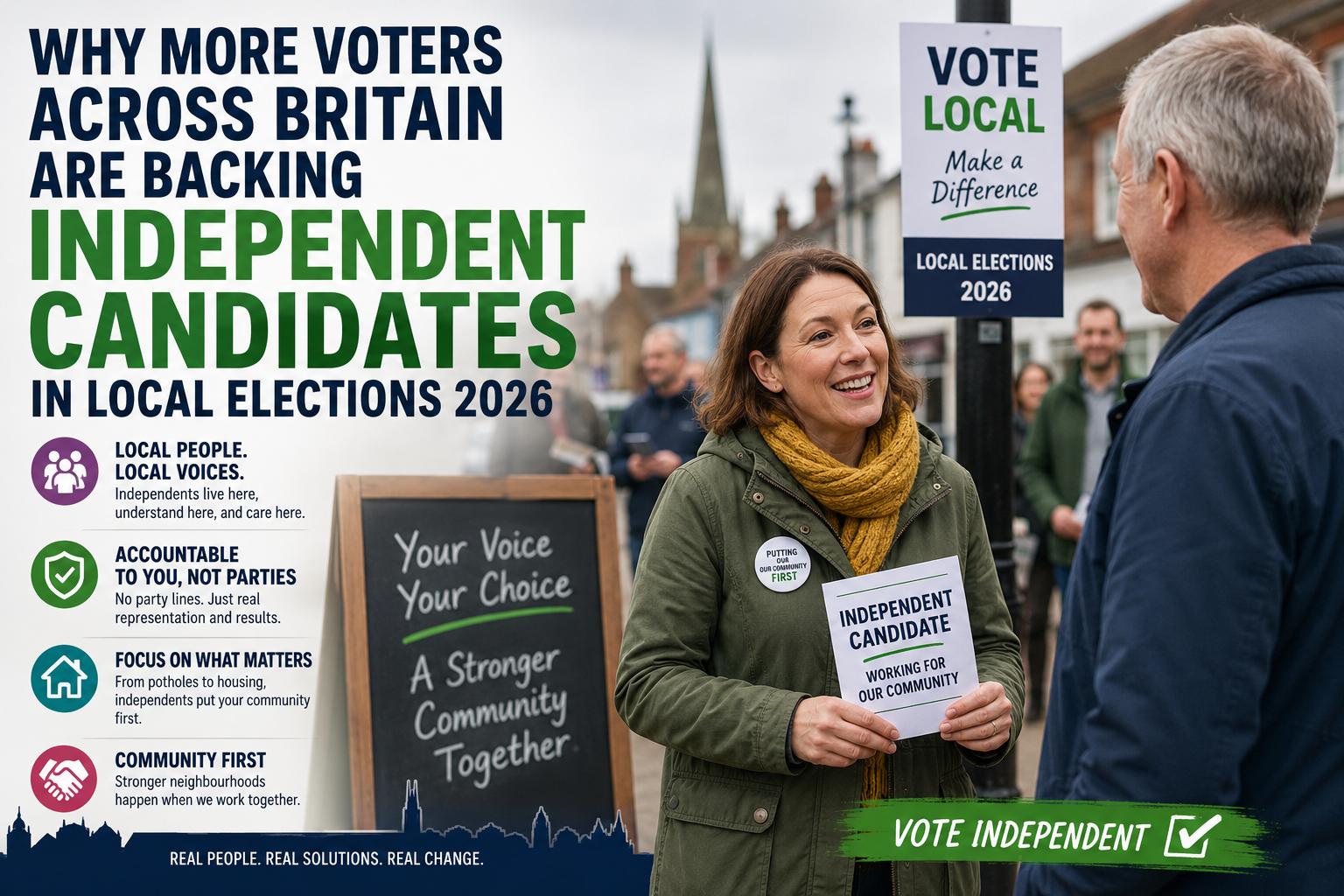
In towns, villages and cities across England especially, independents are stepping forward because many people feel the big parties no longer listen. Too often, local elections become arguments about Westminster personalities and national headlines, while everyday issues - potholes, housing, parking, anti-social behaviour, local businesses, rubbish collection and public services - get pushed aside.
Independent candidates argue local elections should actually be about local people.
Unlike party politicians, independents are not tied to national party lines or pressured by Westminster leaderships. They can focus entirely on what matters to the community they represent, not what benefits a party machine hundreds of miles away.
For many voters, that independence matters.
Some simply feel let down by Labour and the Conservatives after years of political division and broken promises. Others are frustrated by career politicians who appear more interested in party promotion than practical results.
Independent councillors often campaign differently too. They are usually far more visible locally, easier to contact directly and more accountable because they rely on personal trust rather than party branding.
And in many communities, people increasingly believe local decisions are better made by local residents who actually understand the area.
That growing frustration with traditional politics is reshaping the wider election picture too.
In Wales, Plaid Cymru is battling Reform UK to emerge as the largest party in the newly expanded Senedd. Plaid argues it is the strongest force capable of stopping Nigel Farage’s party making major gains.
Reform UK, meanwhile, believes these elections could mark another major breakthrough as it continues positioning itself as the anti-establishment alternative to Britain’s traditional parties.
In Scotland, the SNP is hoping to secure a fifth straight devolved election victory, while Reform aims to expand its support even in areas that once strongly rejected Brexit politics.
But beneath all of those national battles, there is a much broader shift taking place.
British politics is fragmenting.
The old assumption that Labour or the Conservatives would dominate almost every election no longer holds true. Voters are increasingly willing to back smaller parties, local campaigns and independent voices if they believe those candidates genuinely represent them.
The Liberal Democrats continue targeting areas where they believe they can replace the Conservatives locally, while the Greens are hoping to gain support from younger and urban voters disappointed with Labour.
But independents occupy a different space altogether.
They are often seen not as ideological campaigners, but as practical community representatives - people who care less about political point-scoring and more about getting things fixed.
For many voters, especially in local elections, that can feel refreshing.
An independent councillor cannot blame Westminster, party leaderships or internal party politics. They either deliver for their area or they do not. And supporters argue that direct accountability is exactly what local democracy should be about.
Of course, national politics will still shape much of the conversation over the next few days. Labour and the Conservatives both face difficult elections, Reform UK hopes to continue its rise, and smaller parties are looking for breakthroughs.
But one of the most important stories may well be the continued rise of independent politics at a local level.
Because increasingly, voters are asking a simple question:
Who actually speaks for this community?
And for a growing number of people across Britain, the answer is no longer automatically tied to a political party.
Local News
Why More Voters Across Britain Are Backing Independent Candidates in Local Elections 2026
Advertisement


Comments (0)
You must be logged in to post comments.
Don't have an account? Register here
No comments yet. Be the first to share your thoughts!